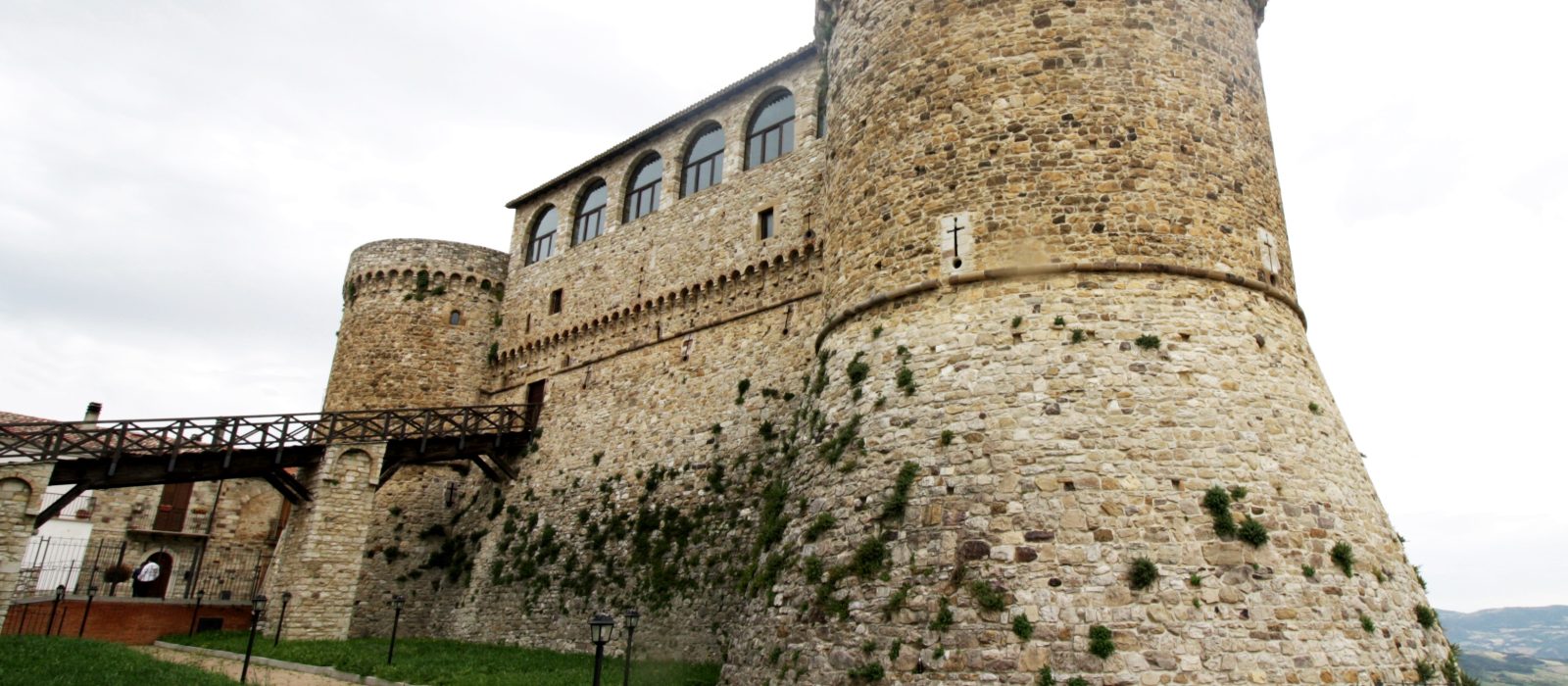
In the wide panorama of fortified settlements in the region, the castle is certainly one of the most suggestive. Despite various alterations, the castle keeps its charm as an ancient giant intact, in harmony with the historic village and the surrounding landscape.
Access to the site requires an entry ticket and admission is allowed up to 30 minutes before closing.
Tickets PDF Guide 2023 Service Charter
We communicate that this Institute is committed to offering the public the longest possible visiting hours, in compliance with the criteria for public opening, vigilance, and security of state museums and cultural sites provided by the D.M. of June 30, 2016.
Civitacampomarano Castle
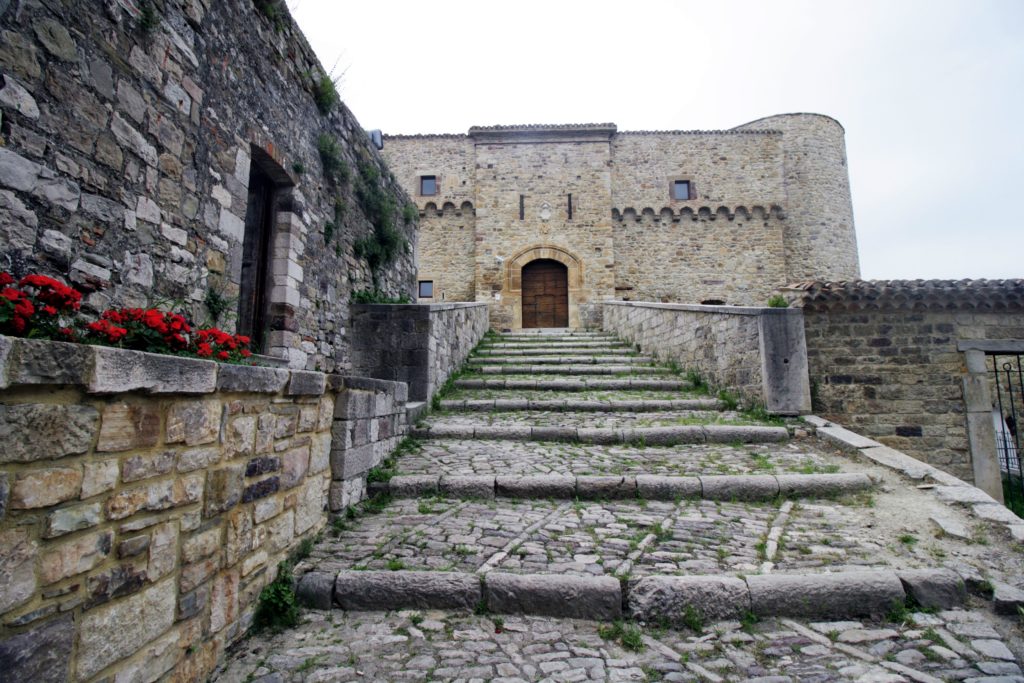
The Castle rises majestically in the upper part of the town of Civitacampomarano, on a sandstone hill previously occupied by a Samnite settlement. The name of the castle and the town perhaps refers to the existence of land properties of the Roman era (Campus Maurunus).
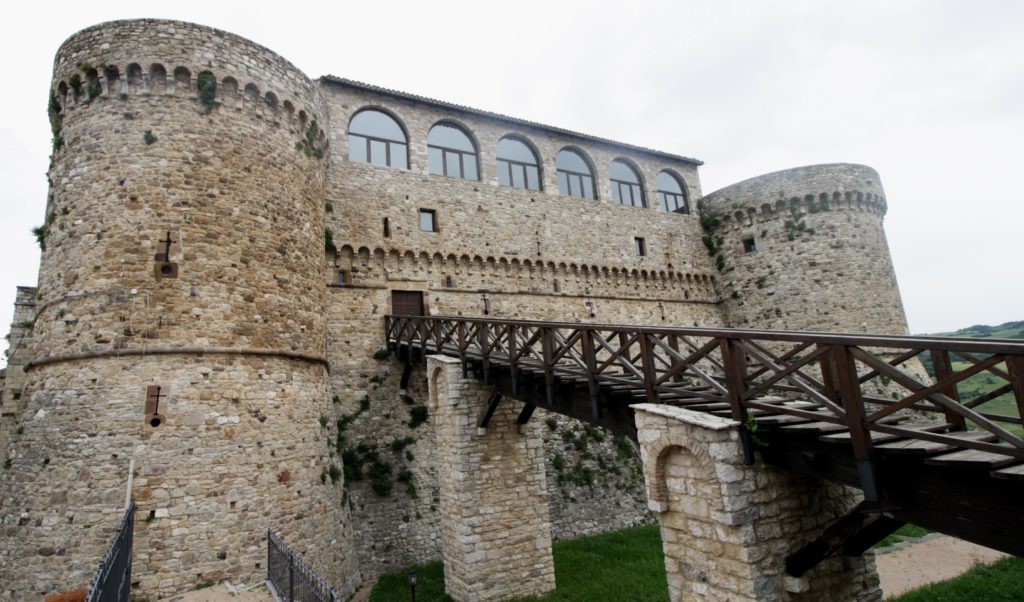
The first remains date back to an initial construction from the Norman era (12th century), but it was in the 15th century that the final layout of the imposing military fortress was outlined: a quadrangular wall with three crenellated cylindrical towers. Each tower is characterized externally by loop-holes and hanging arches supported by stone corbels. The walls were equipped with a patrol path and housing for arquebuses and cannons.
Civitacampomarano Castle was at the center of one of the most clamorous episodes of **betrayal during the conflicts between the Angevins and Aragonese for the conquest of the Kingdom of Naples**, took place during one of the clashes between the two factions in the Plain of Sessano in 1442: the decision of the mercenary captain **Paolo di Sangro** was decisive for the outcome of the battle. Hired by the Angevins, at the crucial moment he went over to the Aragonese side with his men shouting: “Aragona, Aragona!”. For his betrayal Paolo obtained several properties as a reward, including that of Civitacampomarano.
A few years later, the **marriage contract between Cola Monforte and Altabella Di Sangro**, daughter of Paolo, was signed in the castle. And Cola di Monforte and Altabella di Sangro lived right here, the latter having gone down in history for her numerous betrayals, especially when her husband, count of Campobasso, began to fall into disgrace.
In 1795 a popular revolt forced the Mirelli, lords of the time, to fill the northern moat and build a connecting road between the two wings of the town, until then separated by the presence of the Castle. The Mirelli were succeeded by several owners; the last owner sold the castle to the Italian State. On May 2, 1979, the castle, by ministerial decree, was declared a **national monument**.
Architecture
Today Civitacampomarano appears as one of the most suggestive castles in the region. The monument indeed keeps its ancient architecture almost intact, despite the passage of history and the earthquakes that in the past caused landslides and collapses. From whatever side you look at it, **the building amazes with its bulk and architectural audacity**.
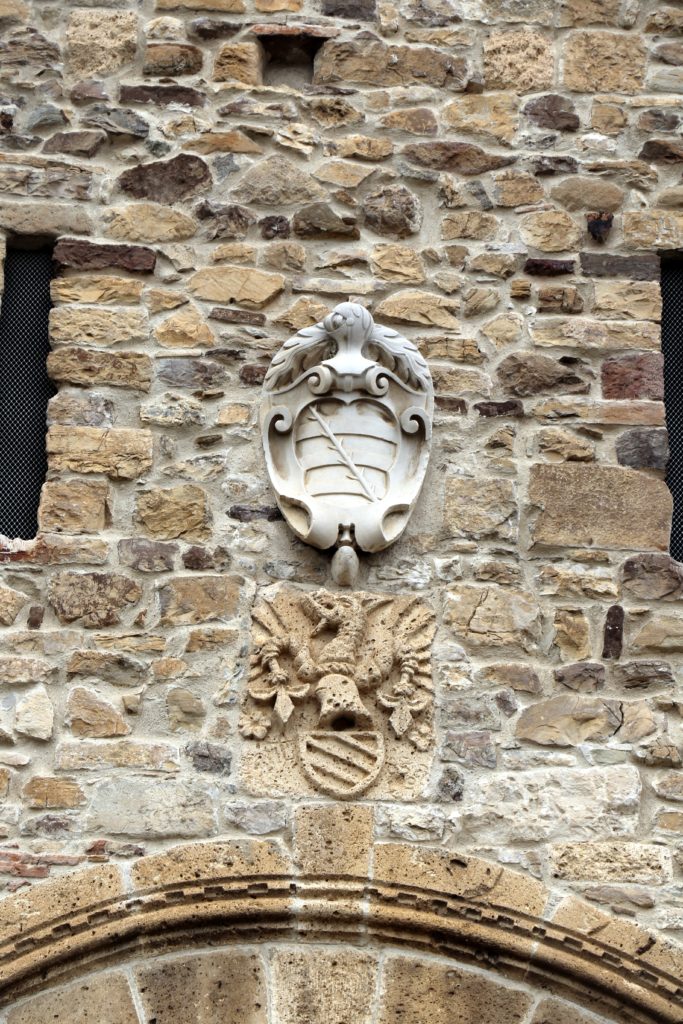
The main entrance is via a large staircase and a notable entrance portal with a beautiful low arch typical of the Catalan-Aragonese style of the 15th century. Above the keystone, **two coats of arms** are preserved: the upper one belongs to the Carafa della Spina family; the lower one is of Paolo di Sangro: it is a Gothic shield with seven gold and blue bands with a helmet on the crest, joined with that of the Monforte, represented by the two rosettes placed next to the shield. This fusion represents the union of the two families.
The coat of arms is then surmounted by a dragon holding two inverted lilies under its claws, an allegorical testimony of the betrayal of the two families against the Angevins in favor of the alliance with the Aragonese. Above the arch one can still notice two rectangular slots that served for the sliding of the drawbridge chains, which is no longer preserved today.
Nel cortile interno si conserva la graziosa fontana c.d. “sannita” formata da una scultura con quattro figure antropomorfe, qui collocata dagli ultimi proprietari in epoca moderna. Poco lontano si trova un pozzo per la raccolta dell’acqua piovana, collegato a una cisterna della capacità di 120.000 litri che in passato approvvigionava tutto il paese.
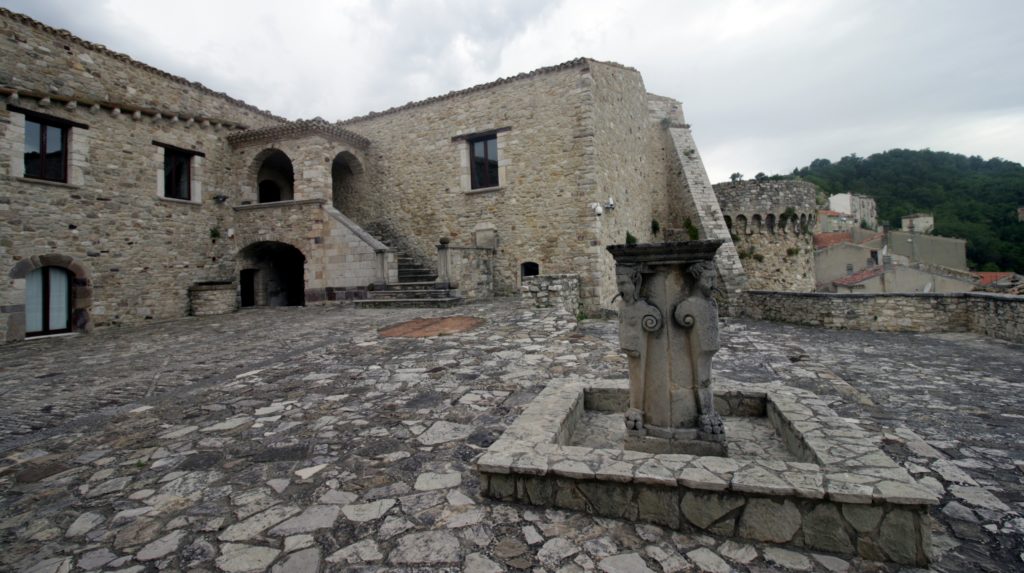
A small open staircase leads to the first floor with the **noble rooms** and service environments that partially retain their painted decoration. On the lower floors there were stables, warehouses, the granary, and from here there was access to the towers and patrol paths. Under the main tower, an internal staircase led **to the moat and the prisons**.
Over the centuries the monument has undergone several interventions: the filling of the moat, the collapse of part of the northern side, the modifications to the internal spaces; nevertheless, it keeps intact its charm as an “ancient giant” in perfect harmony with the historic center and the surrounding landscape.
The Contemporary Art Collection
In July 2023, Civitacampomarano Castle presented the first core of its new contemporary art collection which aims to launch the castle towards a new cultural dimension as a contemporary art museum. A project conceived and realized by the Regional Directorate of Museums of Molise in collaboration with ARATRO, the Contemporary Art Laboratory Museum of the University of Molise. This initial part of the collection was made possible thanks to the PAC, Contemporary Art Plan financed by the Directorate General for Contemporary Creativity of the Ministry of Culture.
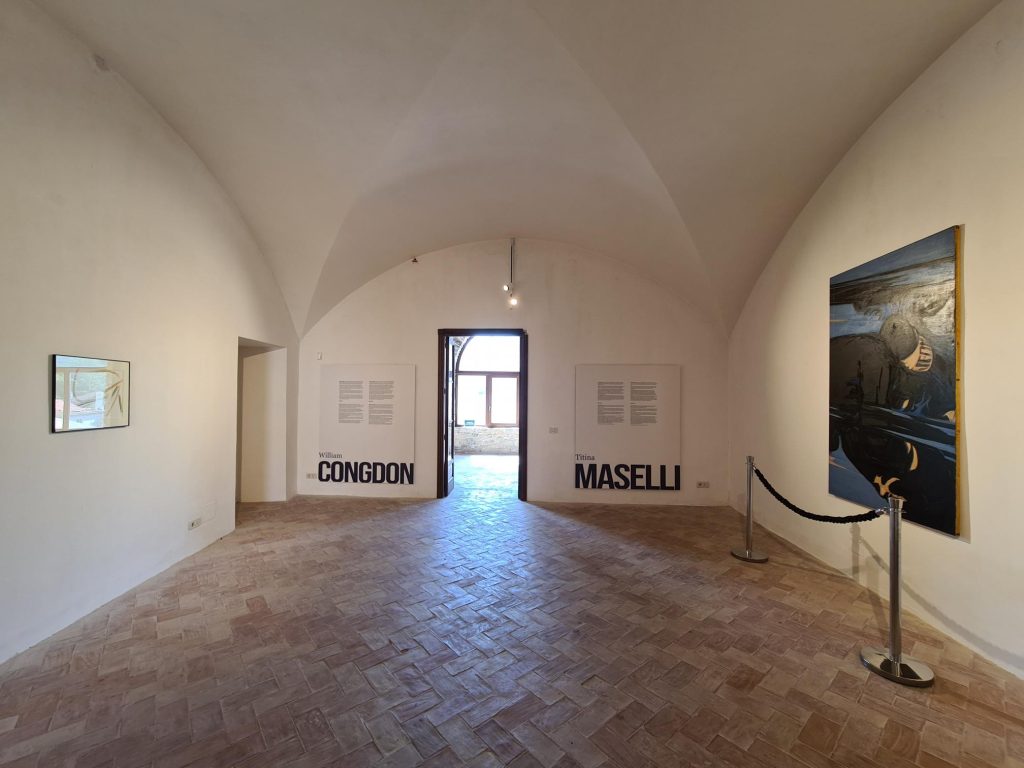
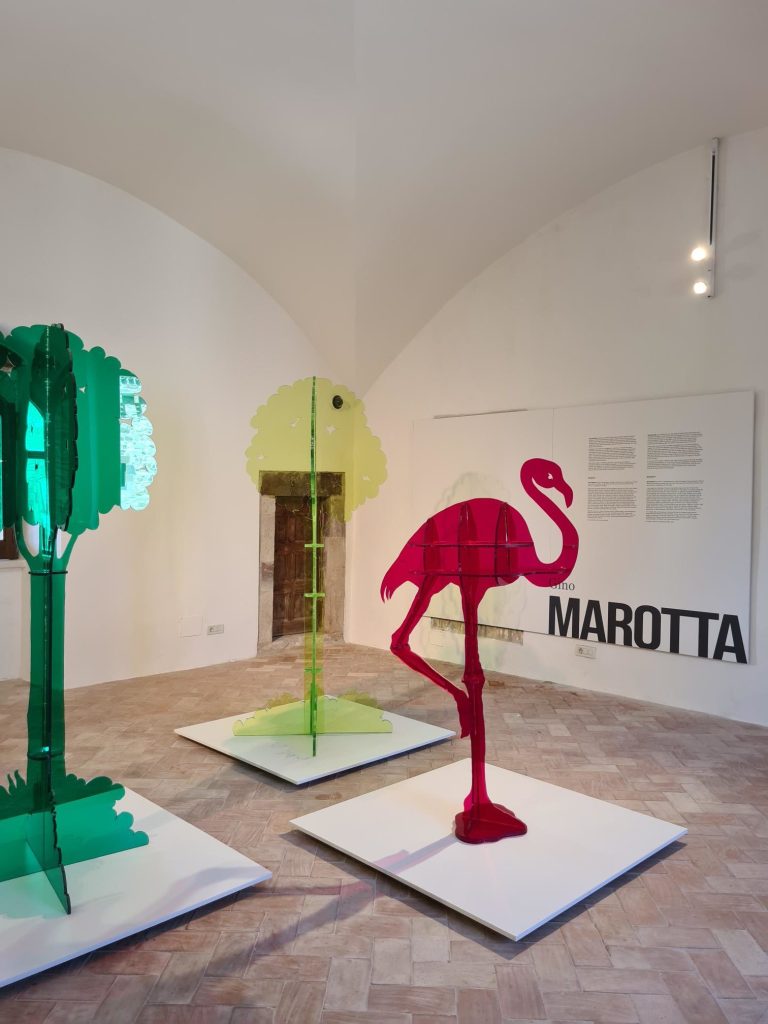
Thanks to the contribution of the PAC, important works by central figures in late twentieth-century art who had a connection with Molise were acquired, such as William Congdon, a volunteer ambulance driver on the Gustav Line during the Second World War, Gino Marotta, born in Campobasso, and Titina Maselli, whose family was originally from Pescolanciano. The display project focuses on the relationship between contemporary art and the regional territory, in a town like Civitacampomarano, which is gaining wide notoriety as a result of the public art interventions of the CVTà Street Fest.
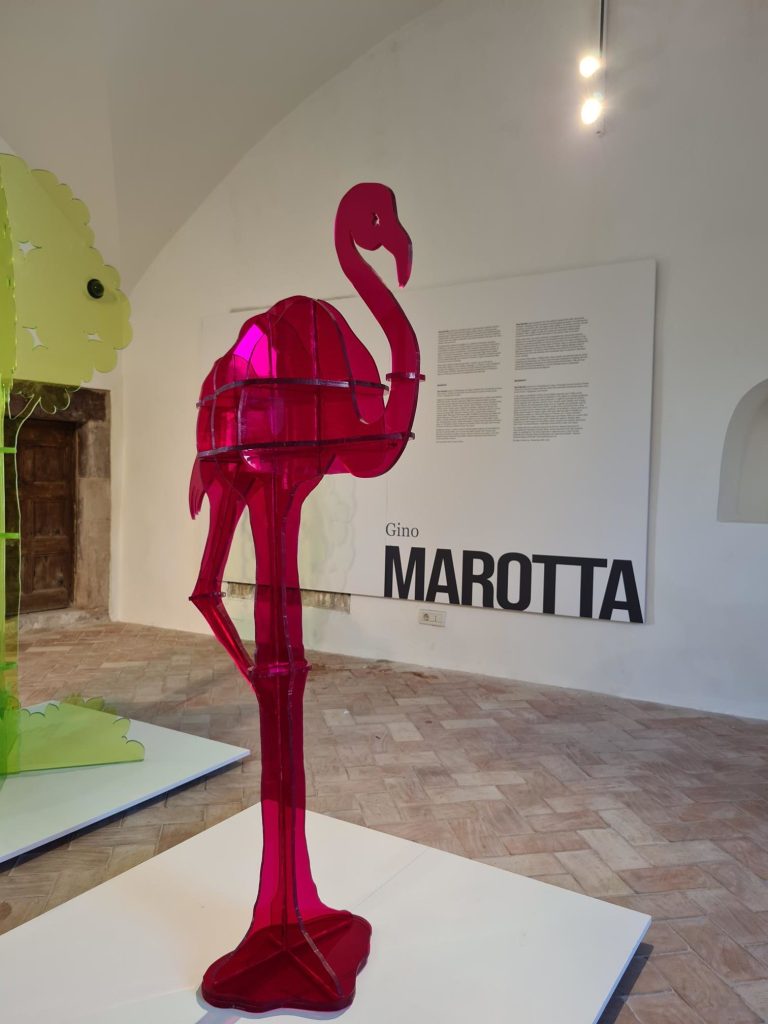
The evolving collection of the new museum therefore aims to document this relationship, thanks to the acquisition of historicized figures which will, however, also give space to the most innovative research of contemporary art, in a non-localistic vision, but one that dialogues with the territory in a dimension of international openness. A museum located in a fascinating place, where one feels a secular breath that intends to start from the greatness of the past to speak the languages of the present and the future.
 Buy ticket on Musei Italiani