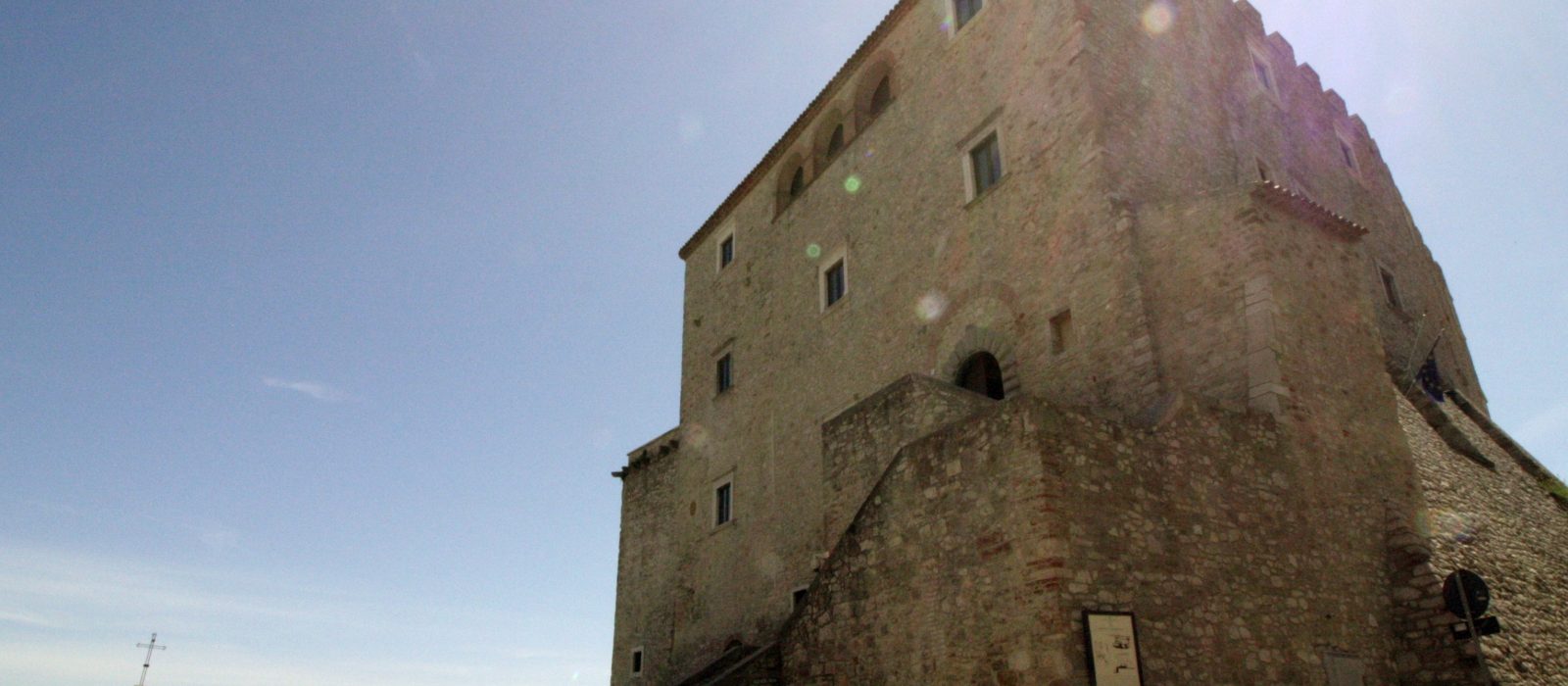
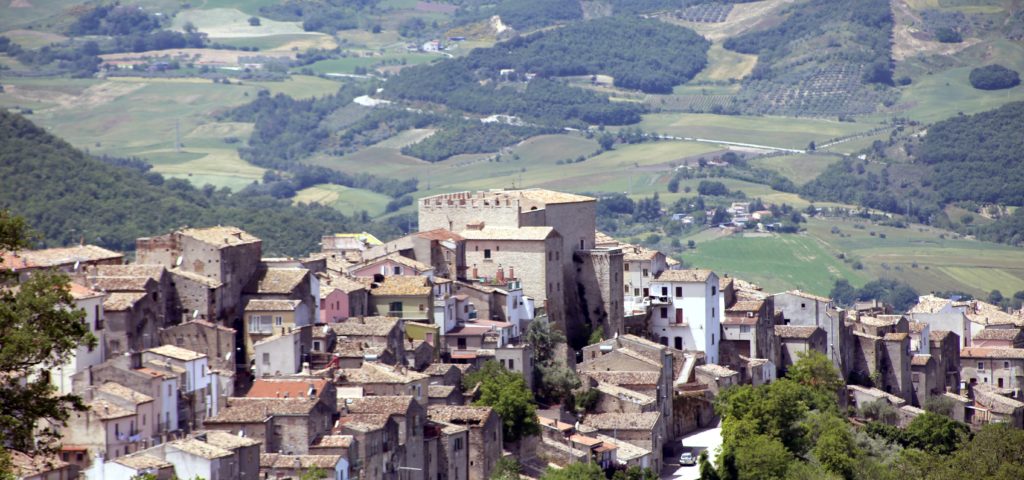
The Castle has medieval origins but, starting from the fifteenth century, it was transformed into a Renaissance residence.
A strategic point for the control of transhumance routes between Puglia and Abruzzo, it was the residence of the de Capua family.
History of the Castle
In a border territory between Molise and Puglia characterized by mountainous reliefs, in the thirteenth century Riccardo da Pietravalle became the lord of a place that would take its name from his physical defect: Gambatesa. The control of the transhumance routes made the fortune of the families that succeeded one another as lords of the place. The local castle is a symbol of this prosperity.
The Capua family, having acquired it in 1484, revolutionized the architecture of the castle, tearing down much of the severe medieval military architectures and refining it to make it a noble palace. Consequently, this residence assumes the double name “de Capua” and “Gambatesa”, respectively from the names of the first owners and from the name of who definitively remodeled the building.
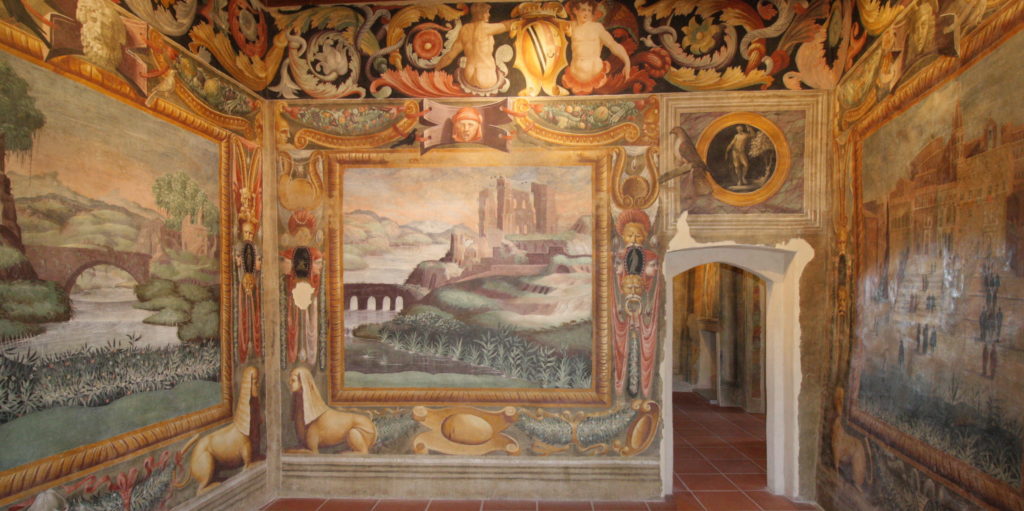
The Frescoes of Donato Decumbertino
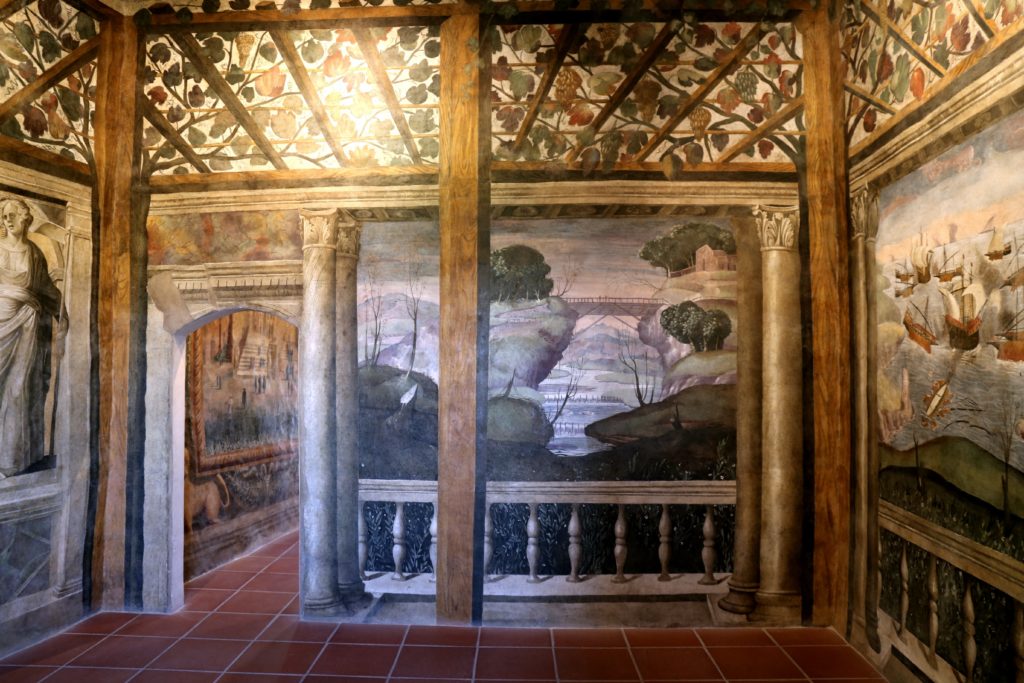
In 1550 Vincenzo di Capua, author of the Renaissance transformation of the castle, commissioned the Mannerist-style pictorial cycle to the painter Donato Decumbertino. The latter was inspired by the artistic production of Naples and Rome of the mid-sixteenth century. The pictorial cycle, despite the gaps, reveals a density of meanings in which mythology and inspiration from the history and art of antiquity intertwine with Christian themes to highlight those moral, civil and military virtues that the de Capua family believed they embodied and therefore wished to communicate to their guests.
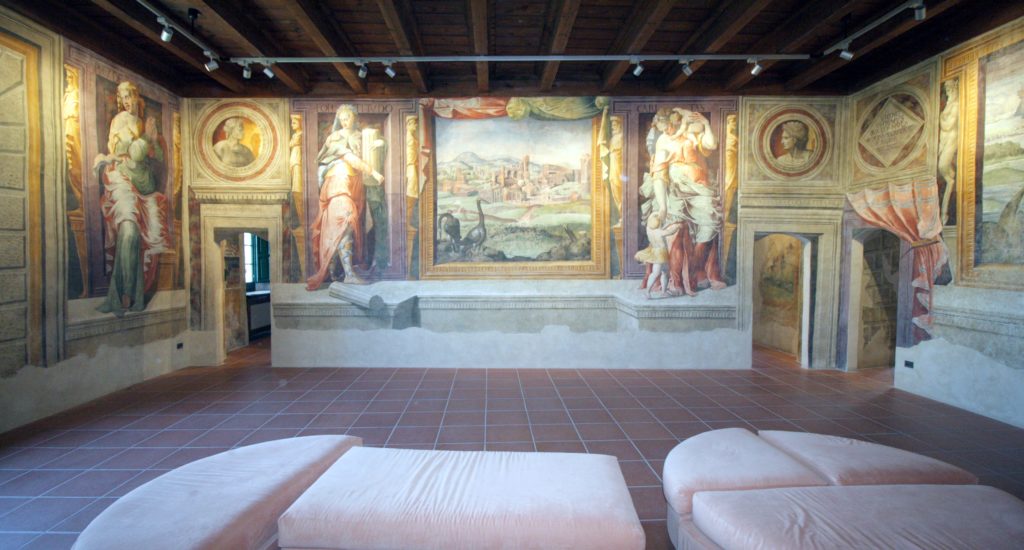
Le sale interne sono per la maggior parte decorate con l’importante ciclo affrescato. Accedere al Salone delle Virtù, alla Sala delle Maschere, alla Sala del Pergolato, alla Sala del Cammino e allo Studiolo, è come sfogliare un libro di arte del Manierismo.
In altre ampie sale, dove si possono ammirare anche interessanti dettagli architettonici tardo medioevali, sono ospitate, in due mostre, parte delle collezioni Praitano ed Eliseo e parte della collezione Musa. Si tratta di collezioni di pitture che vanno dall’età moderna all’età contemporanea.
Una caccia al tesoro tra gli affreschi
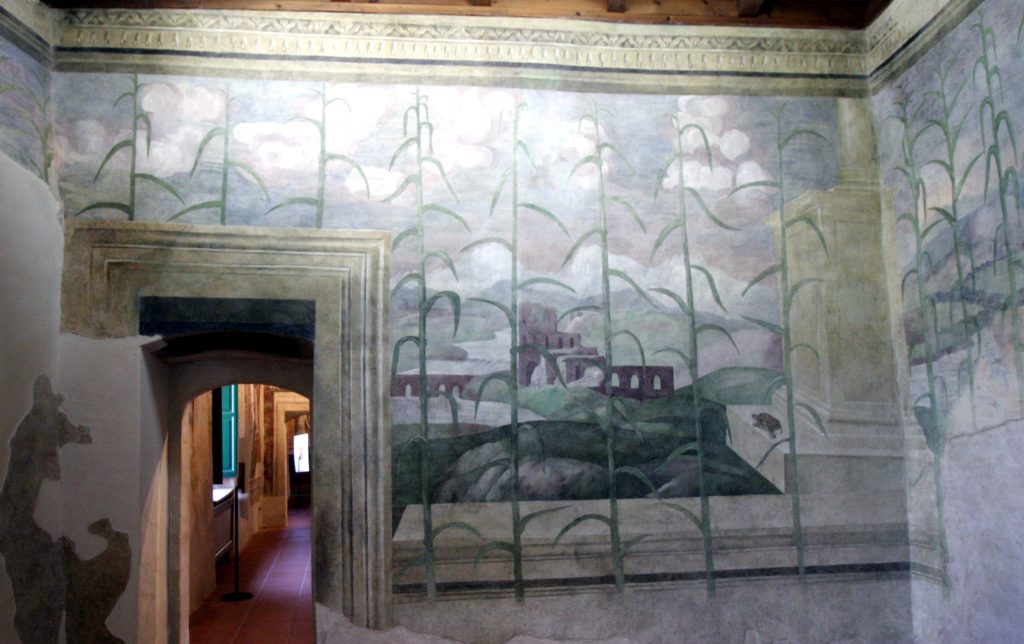
Arricchisci la tua visita con una piccola caccia al tesoro, cercando nelle varie sale i particolari curiosi presenti negli affreschi! Per esempio, una piccola tartaruga tra le rovine antiche della Sala del Canneto rappresenta la modestia, il temporeggiamento e la pudicizia.
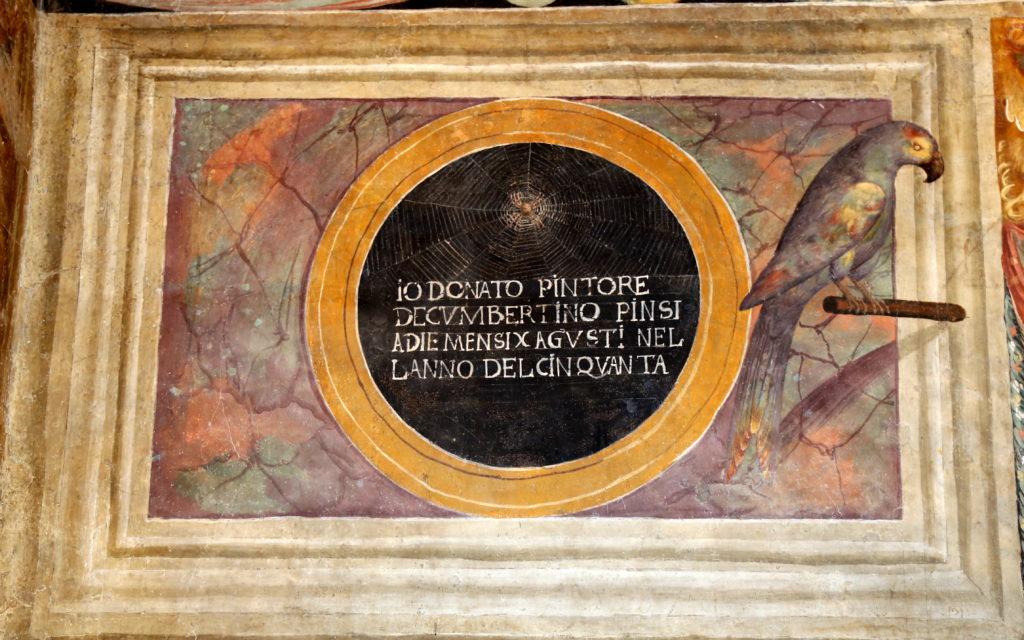
Tra gli altri animali troviamo anche una civetta, uccello notturno simbolo della sapienza e attribuito alla dea Minerva, e un pappagallo, non solo simbolo di eloquenza per la sua capacità di imitare la voce umana ma anche quale animale indicato nelle fonti classiche e cristiane come uccello salutante con “ave” gli imperatori e potenti.
Nel clipeo infatti, accanto al pappagallo, notiamo un ragno che ha intessuto la sua ragnatela, di notevole effetto illusorio. Nella ragnatela è impigliata l’iscrizione che riporta il nome del pittore: IO DONATO PINTORE / DECUMBERTINO PINSI / A DIE MENSI X AUGUSTI NEL / L’ANNO DEL CINQUANTA.
Progetto INNOCULTOUR
A seguito di collaborazione con gli istituti scolastici Liceo artistico G. Manzù e Convitto Mario Pagano è stato realizzato un sito, che permette di spaziare, dalle opere contenute nel museo e quelle realizzate in edifici e chiese del territorio, da artisti Molisani. I contenuti sono visibili anche al seguente link: www.invisibilevisibile.it
 Buy ticket on Musei Italiani