https://www.youtube.com/watch?v=zHePBj7Bngw
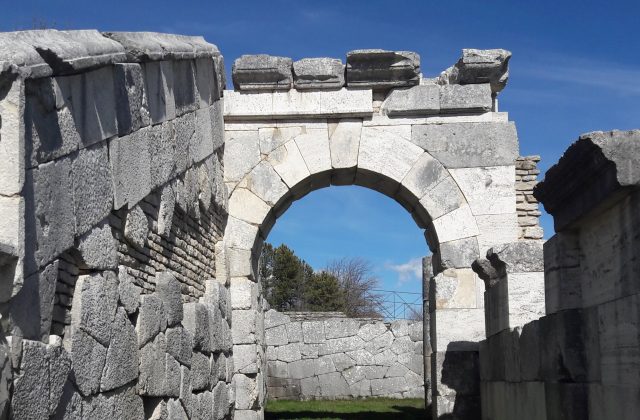
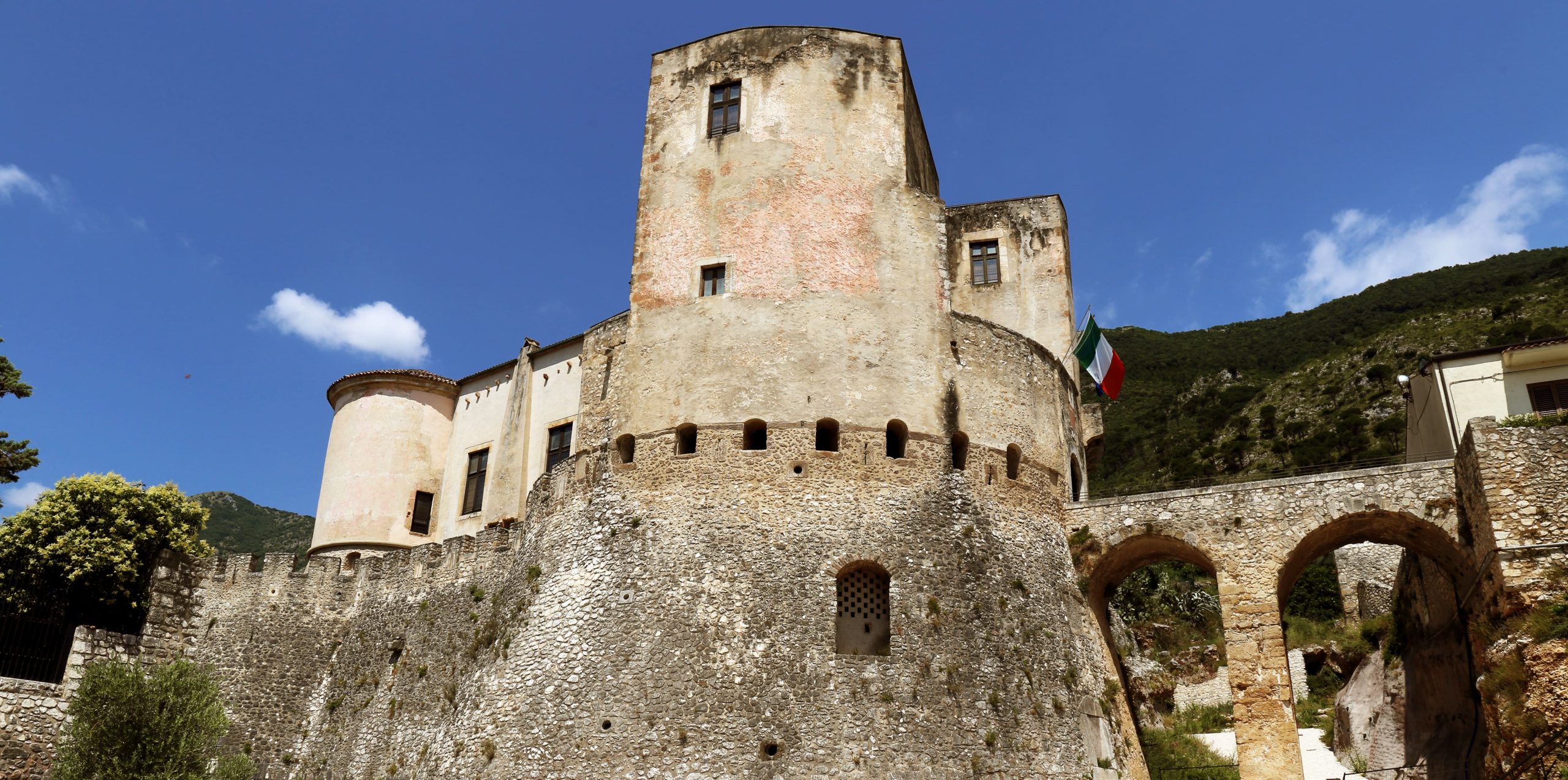
On the fortress that dominates Venafro, first the Samnites and then the Lombards built fortifications that were later incorporated into the Angevin castle, characterized by three large circular towers.
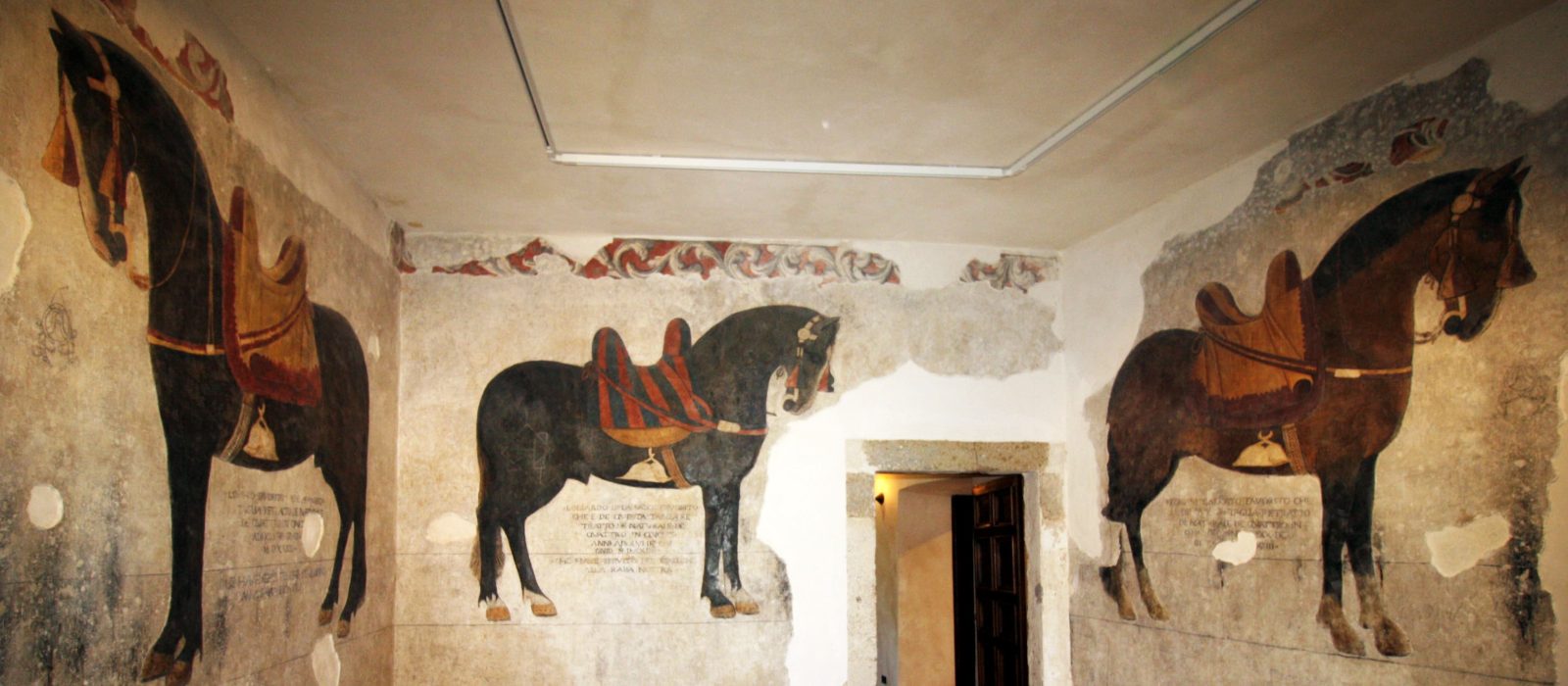
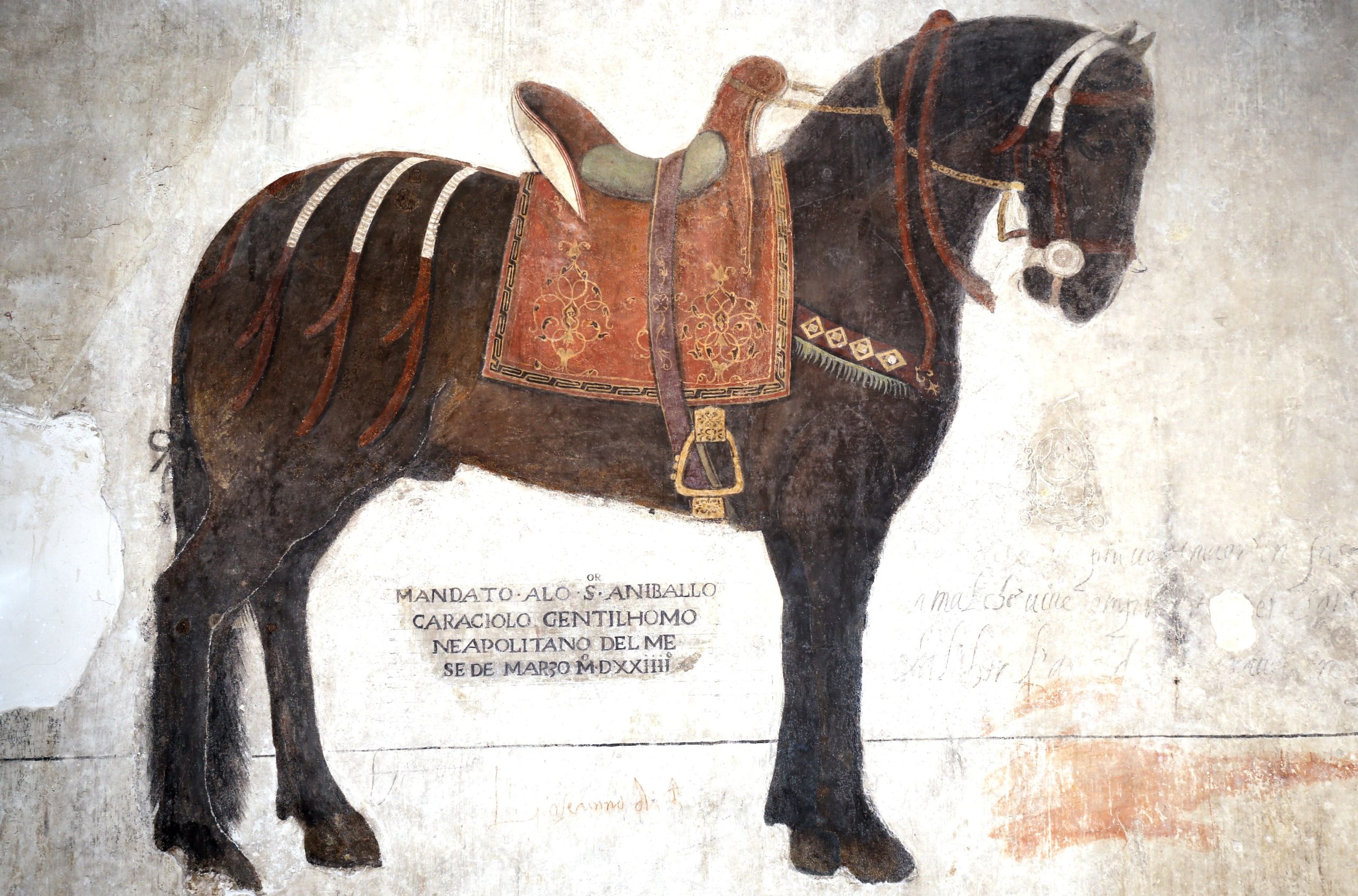
In 1443, under the Aragonese, the castle passed to the Pandone family. Enrico Pandone converted the building into a residence of representation. Between 1522 and 1527 he had every room of the noble floor frescoed with the representation of his horses, the stallions of the royal stables, which he himself bred.
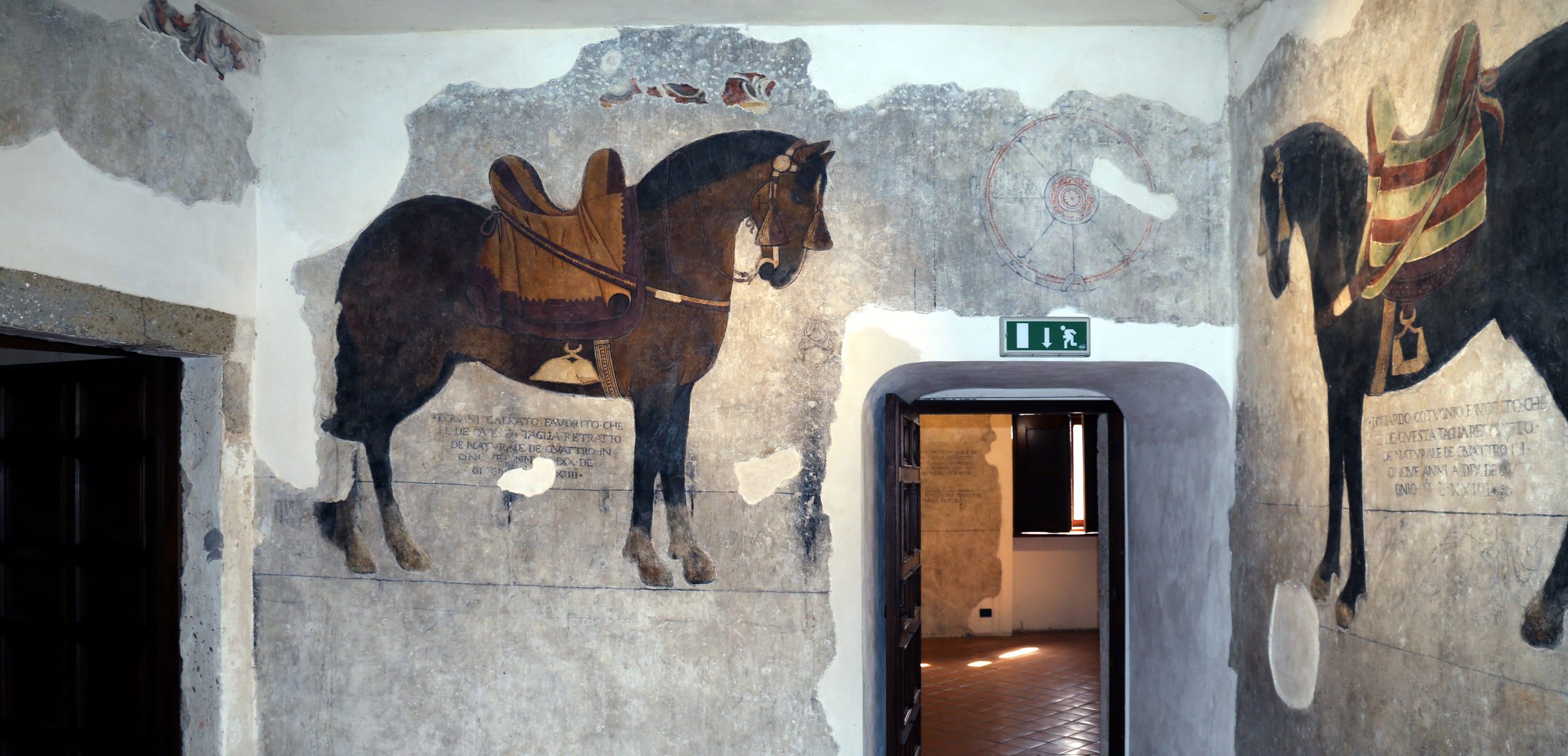
The execution technique is that of frescoed relief plaster. Each specimen features the monogram of Count Enrico, a circumscribed H, the illusionistic bit of the horse hung on a nail, and a caption containing the name of the horse, breed, age, and recipients. This last detail reveals the dense network of political relations of the Count.
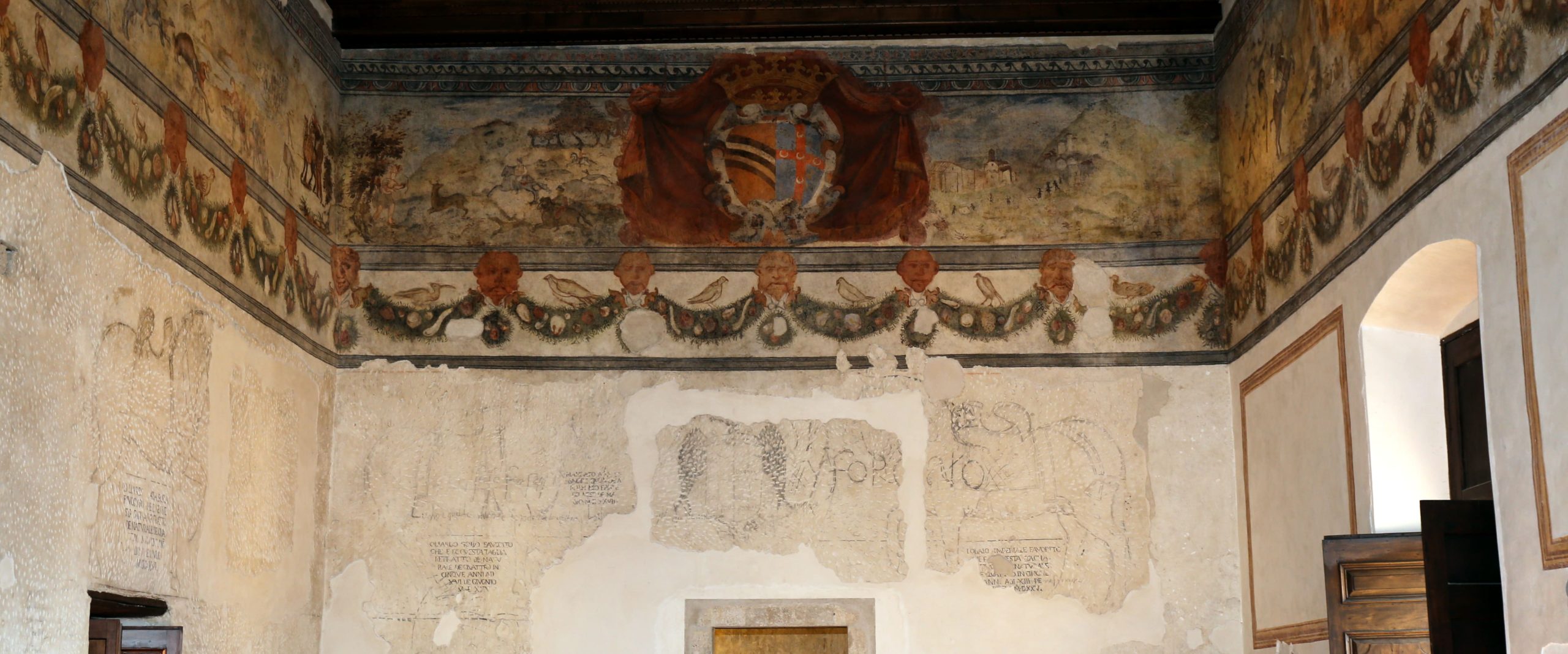
In the hall of festivities, the largest room of the noble floor, one reads the spatial-temporal succession of frescoes of various eras. Dating from after the cycle of horses is the decoration of the upper band: a succession of representations including landscapes, hunting scenes, moments of city life with urban views and exotic landscapes reflecting the echo of recent geographical discoveries. In the center of each side of the frieze are the noble coats of arms of the de Capua and families related to them.
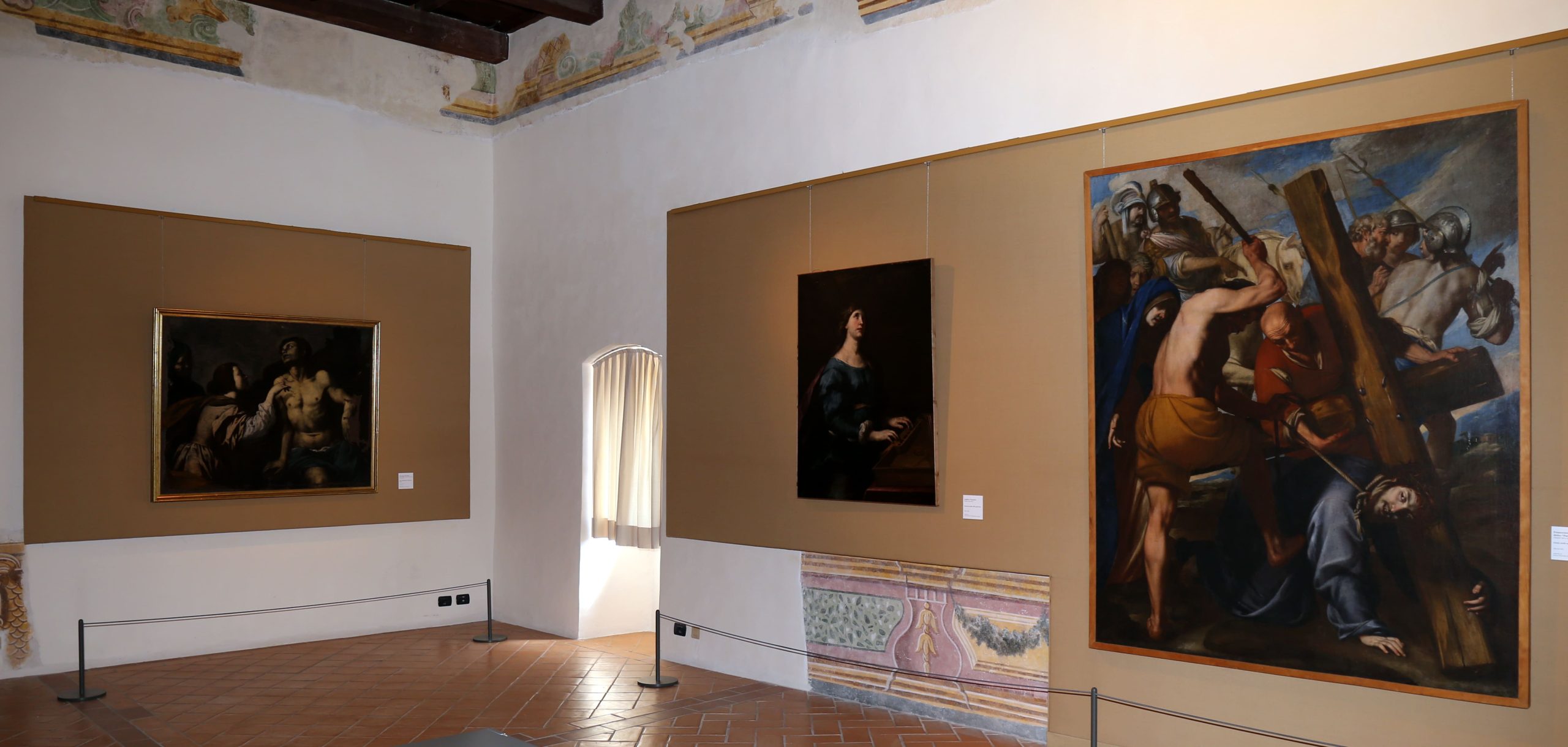
On the second floor, the visitor route continues with the exhibition of frescoes, sculptures, canvases, drawings and prints, in an itinerary that documents the chronology – from the Middle Ages to the Baroque – and the different cultural orientations of patrons and artists in Molise. The path is conceived as a timeline that, starting from the pictorial testimonies from Santa Maria delle Monache in Isernia, dating back to the 7th century, reaches the beginning of the 20th century with the woodcuts, photographs and watercolors depicting the Molise territory of the Musa Collection.
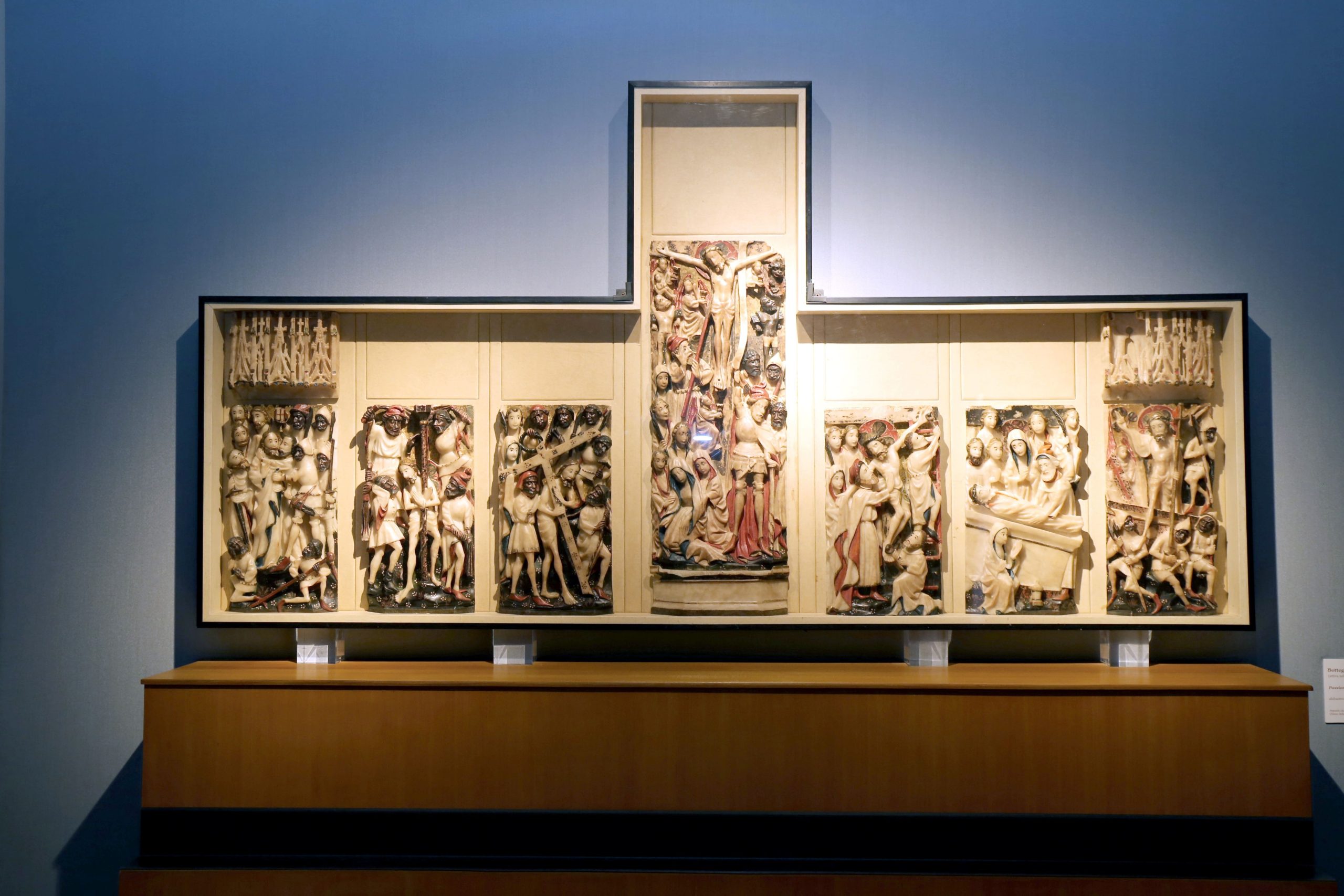
Among these works you can admire the alabaster polyptych coming from the Church of the Annunziata in Venafro.
The Museum also houses works coming from the deposits of the Capodimonte and San Martino Museums in Naples, the National Gallery of Ancient Art in Rome, and the Royal Palace of Caserta.
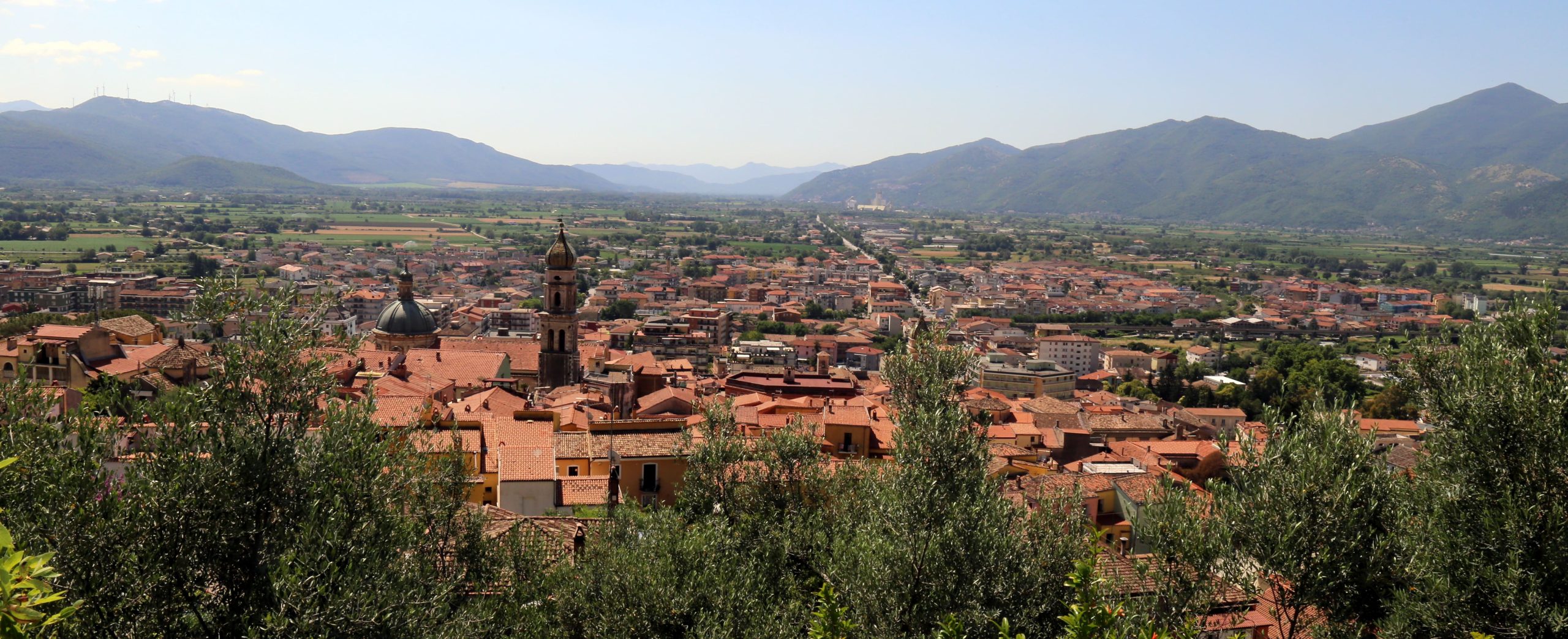
From the terrace of the castle you can finally admire the plain of Venafro, where you can discover the traces of two thousand years of land use.
The Castle of Venafro takes its name from the Pandone family, ancient owner of this medieval manor later transformed, in the sixteenth century, into a noble palace.
In one wing of the castle you can visit the rooms refined by Count Enrico Pandone between 1522 and 1527, with the original frescoes representing the horses owned by him, or the ‘Noble Salon’ with the cycle of frescoes on a bucolic theme, also from the sixteenth century.
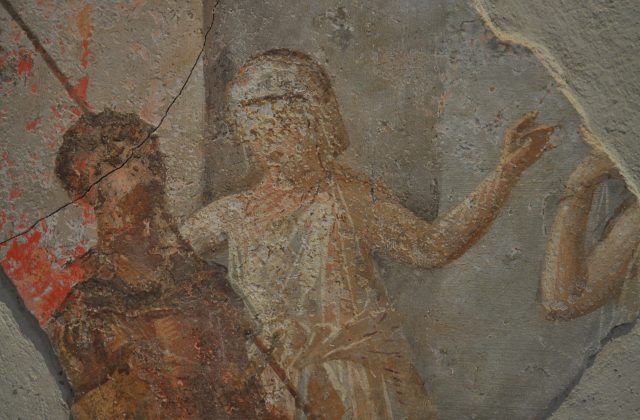
Another wing houses the National Museum of Molise, which preserves paintings ranging from the early Christian era to the modern era. The museum route begins with the oldest painting testimonies in Molise, such as the seventh-century fresco fragments from Santa Maria delle Monache of Isernia, and then continues with medieval works such as the fresco with Saints Bartholomew and Michael from the church of San Michele in Roccaravindola and the fourteenth-century sculpture of the Madonna with Child from Santa Maria della Strada in Matrice.
The polyptych with scenes from the Passion of Christ, made in alabaster in the fifteenth century by an English workshop in Nottingham, is indicative of a demanding patronage.
Works produced in Naples for Molise or by Molise artists trained in Naples have been placed in dialogue with paintings from important state museums such as the Capodimonte National Museum (Naples), the San Martino National Museum (Naples), the National Gallery of Ancient Art in Palazzo Barberini (Rome), and the Royal Palace of Caserta.
The museum path then continues with central-southern painting of the seventeenth century: it exhibits drawings and prints belonging to families of artists coming from the Molise town of Oratino and the collection of Giacomo and Nicola Giuliani, of whom drawings with sacred subjects, decorations for civil buildings and furnishings are shown.
For painting between the seventeenth and eighteenth centuries, two Neapolitan artists were the reference points for Italy and Europe: Luca Giordano and Francesco Solimena. The former, after the initial influence of Ribera’s naturalism, crossed the peninsula to study the works of Pietro da Cortona, Titian, and Veronese, and developed his own lively and whirling pictorial language, fluid almost to formal and luministic dissolution. The latter developed a style between naturalism and the baroque of Giovanni Lanfranco and Mattia Preti, concrete and defined as in the ‘Madonna with Child’ of the National Gallery of Ancient Art in Palazzo Barberini, where there is that formal firmness recurring in altarpieces and scenographic decorations.
With the two cited protagonists of the pictorial scene, other local artists inevitably measured themselves, interpreting their novelties and spreading them in the different territories. For the eighteenth century, the ‘Madonna with Child and Saint Nicholas of Tolentino’ stands out for quality in Venafro, from the Church of Sant’Agostino in Venafro, by Nicola Maria Rossi, highly influenced by Solimena, or the ‘Mysteries of the Rosary’ by a follower of Francesco De Mura, from the Church of Sant’Agostino in Venafro.
Suggesting the taste for genre painting, which probably characterized the residences of the Neapolitan nobility in Molise, are exhibited still lifes by Gaetano Cusati (San Martino National Museum), who contributed to evolving these subjects from naturalism to baroque, and Baldassarre De Caro (Royal Palace of Caserta), with dense gleams and shadows reflecting the influence of Solimena.
Completing the permanent exhibition is the collection donated by the Musa family, consisting of photographic prints which are the result of the work of photographer Romeo Musa used for his woodcut works.
 Buy ticket on Musei Italiani