In this very place during the 8th century, three noblemen from Benevento, Paldo, Taso, and Tato, decided to build a new monastery to dedicate themselves to a life of meditation and prayer.
Access to the site requires an entry ticket and admission is allowed up to 30 minutes before closing.
Tickets PDF Guide — 2023 Service Charter
The Monastic Complex of San Vincenzo al Volturno: History, Archaeology and Art
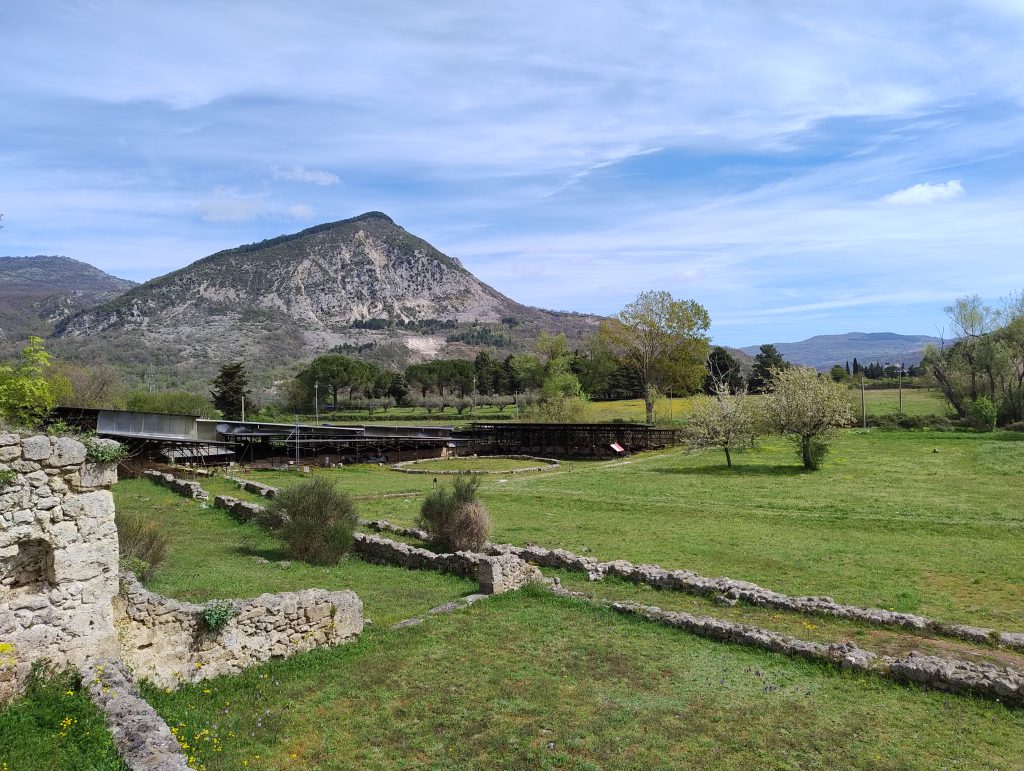
The monastery of San Vincenzo al Volturno rises in Molise, in the current territory of the municipalities of Castel San Vincenzo and Rocchetta a Volturno (province of Isernia). The original core was built along the banks of the Volturno river, in the fertile Rocchetta Plain, in an area strategically and naturally defended by the mountain ranges of the Mainarde, the Meta and the Matese. According to medieval documents, a church dedicated to Saint Vincent of Saragossa, originally erected by the emperor Constantine, already existed in this area in late Roman times.
The Origins and the Golden Age (8th – 9th century)
In this very place, during the 8th century, three noblemen from Benevento — Paldo, Taso and Tato — decided to found a new monastery to dedicate themselves to a life of meditation and prayer. The main historical events and alternating fortunes of the settlement are known to us above all thanks to the Chronicon Vulturnense, a precious illuminated manuscript compiled around 1130 by the monk John, today preserved in the Vatican Apostolic Library.
In 787, the abbey received broad privileges from Charlemagne, rapidly becoming one of the most powerful and influential monastic centers in Europe. In the following century, under the enlightened guidance of the abbots Joshua, Talaric and Epiphanius, San Vincenzo reached the size of a real monastic city: at that time the complex included ten churches, administered vast land properties spread over much of central-southern Italy and housed a hard-working community of about 350 monks.
The Crisis of the 9th Century: Earthquakes and Raids
Il periodo di massimo splendore subì una drammatica battuta d’arresto nella seconda metà del IX secolo a causa di eventi calamitosi naturali e turbolenze politiche. Nell’848, un violento terremoto danneggiò gravemente diversi edifici. Pochi anni dopo, nell’860, l’emiro di Bari, Sawdan, pretese un oneroso tributo di 3.000 monete d’oro per risparmiare il complesso dal saccheggio, costringendo i monaci a piegarsi al ricatto. La situazione precipitò definitivamente nell’881, quando l’attacco di un nuovo gruppo di Arabi mercenari, al servizio del duca-vescovo di Napoli Atanasio II, provocò gravissimi danneggiamenti agli edifici e la dispersione temporanea della comunità.
The Visitor Route: San Vincenzo Minore and the Crypt of Epiphanius
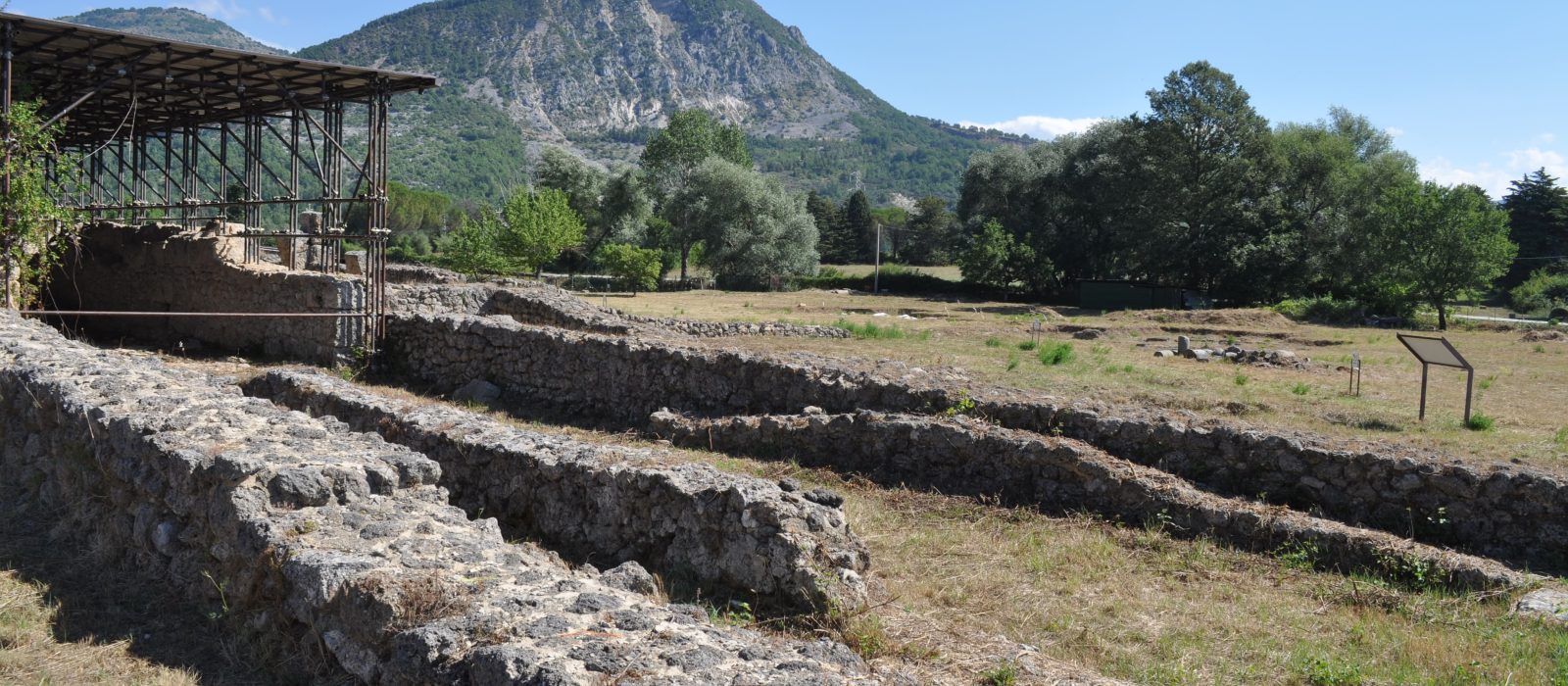
Oggi, le rovine dell’antica città monastica del IX secolo costituiscono un Parco Archeologico di straordinario interesse, riportato alla luce grazie a decenni di indagini stratigrafiche.
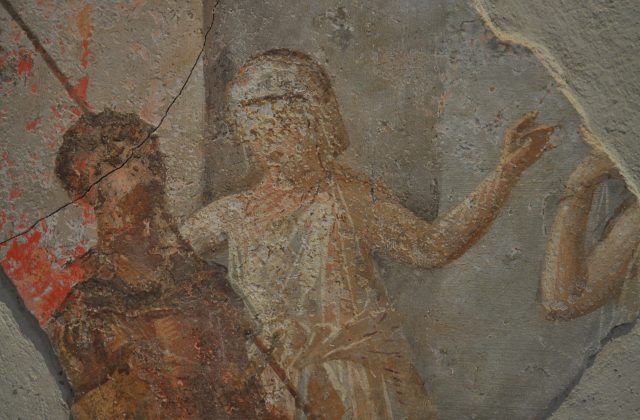
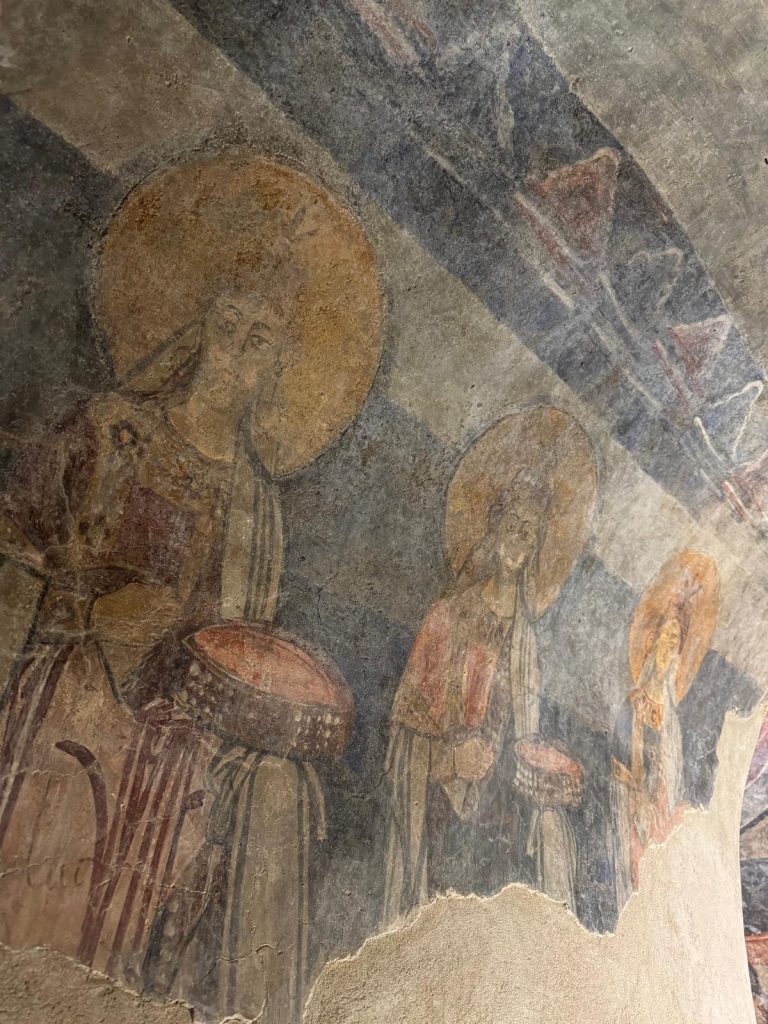
The visitor route begins by crossing the course of the river through the so-called “ponte della Zingara” (Zingara bridge), which introduces the San Vincenzo Minore sector. This block of buildings, originally open towards the Volturno, included productive spaces and areas of daily life such as garden-courts, kitchens, a refectory and a wash house. Below the presbytery of one of the churches in this sector lies the famous Crypt of Epiphanius, built by the homonymous abbot between 824 and 842. Inside, a cycle of frescoes of inestimable value for early medieval art history is preserved intact, including episodes from the life of Jesus and Mary, the martyrdoms of Saint Stephen and Saint Lawrence, enigmatic female figures and suggestive representations of archangels.
The Basilica of San Vincenzo Maggiore and the Crypt of Joshua
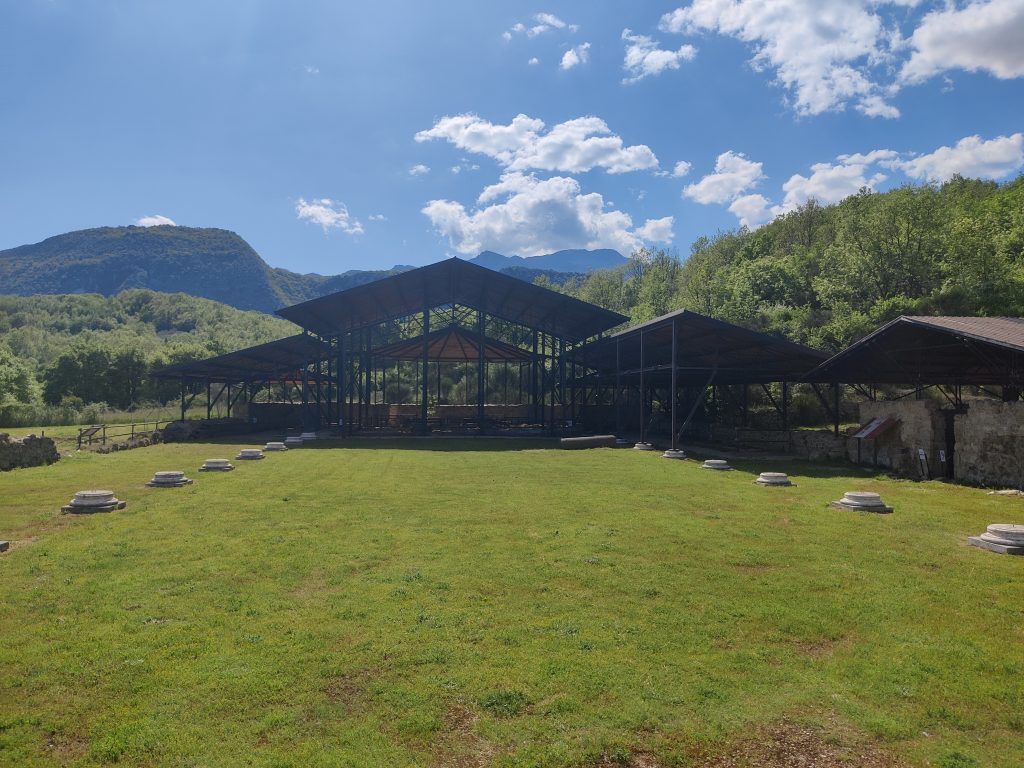
Leaving the area near the Volturno and going up towards the “colle della Torre” (Tower hill), one reaches the atrium of the monumental church of San Vincenzo Maggiore, consecrated in 808. Inside the atrium, leaning against the entrance of the building of worship, several tombs are still visible, some of which preserve traces of frescoes.
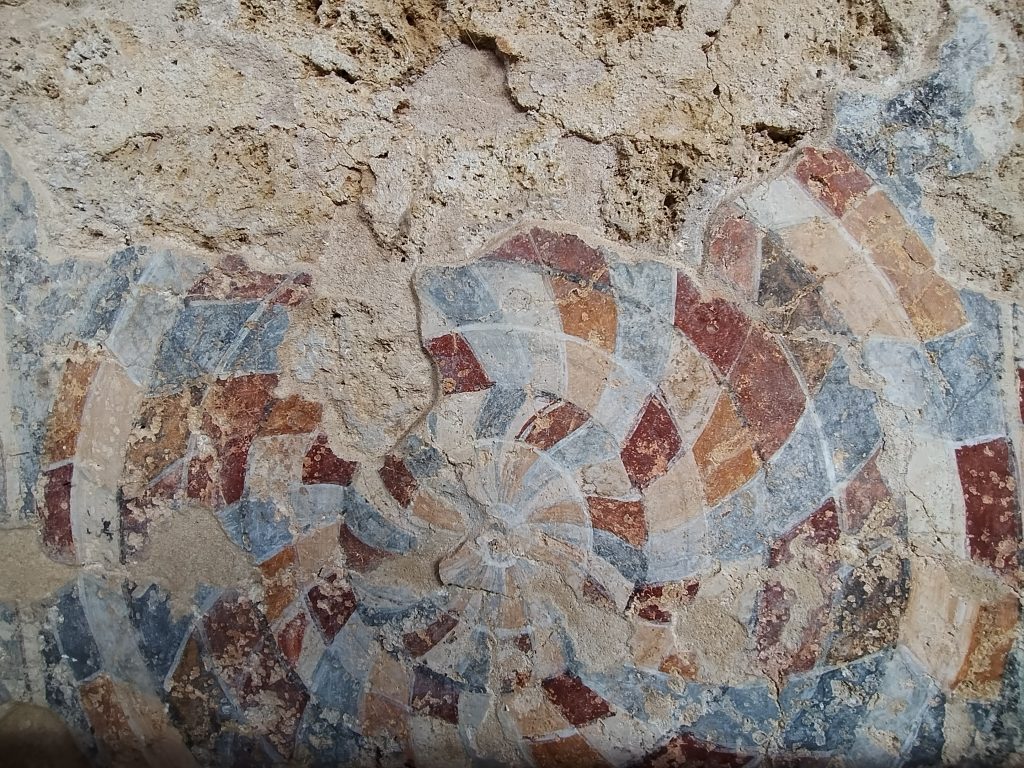
From here one enters the perimeter of the church: a majestic rectangular plan, divided into three naves, which extended for 64 meters in length and 28 in width. The most relevant architectural peculiarity of the building is the annular crypt (known as the Crypt of Joshua), located below the high altar. Its complex structure closely recalls the one that characterized the original Constantinian layout of St. Peter’s Basilica in Rome. In this underground environment the relics of Saint Vincent were preserved; the space was decorated with frescoes showing half-length figures, among which it is hypothesized that the abbot Joshua himself and his successor Talaric are portrayed.
The Twilight of the original site and the New Abbey
Along the north side of the large basilica, near the original entrance, the remains of the chapel of Santa Restituta are preserved. Its construction dates back to the 11th century, at a time when the early medieval core was already declining, and it was probably conceived as a sanctuary to preserve the memory of the ancient glory of the monastery. From this period, the history of San Vincenzo al Volturno experienced a split: the old site was progressively abandoned in favor of the construction of a new and fortified abbey complex (San Vincenzo Nuovo), built on the right (western) bank of the river, where monastic life continued in the following centuries.
 Buy ticket on Musei Italiani